I had been wearing the Vomero Plus for about three pairs in a row. I kept choosing it because I liked it, but after three pairs I felt like trying something different for a change. At Sports Depo, the Pegasus Plus 2 was the same price as the Vomero Plus, so I picked it up.
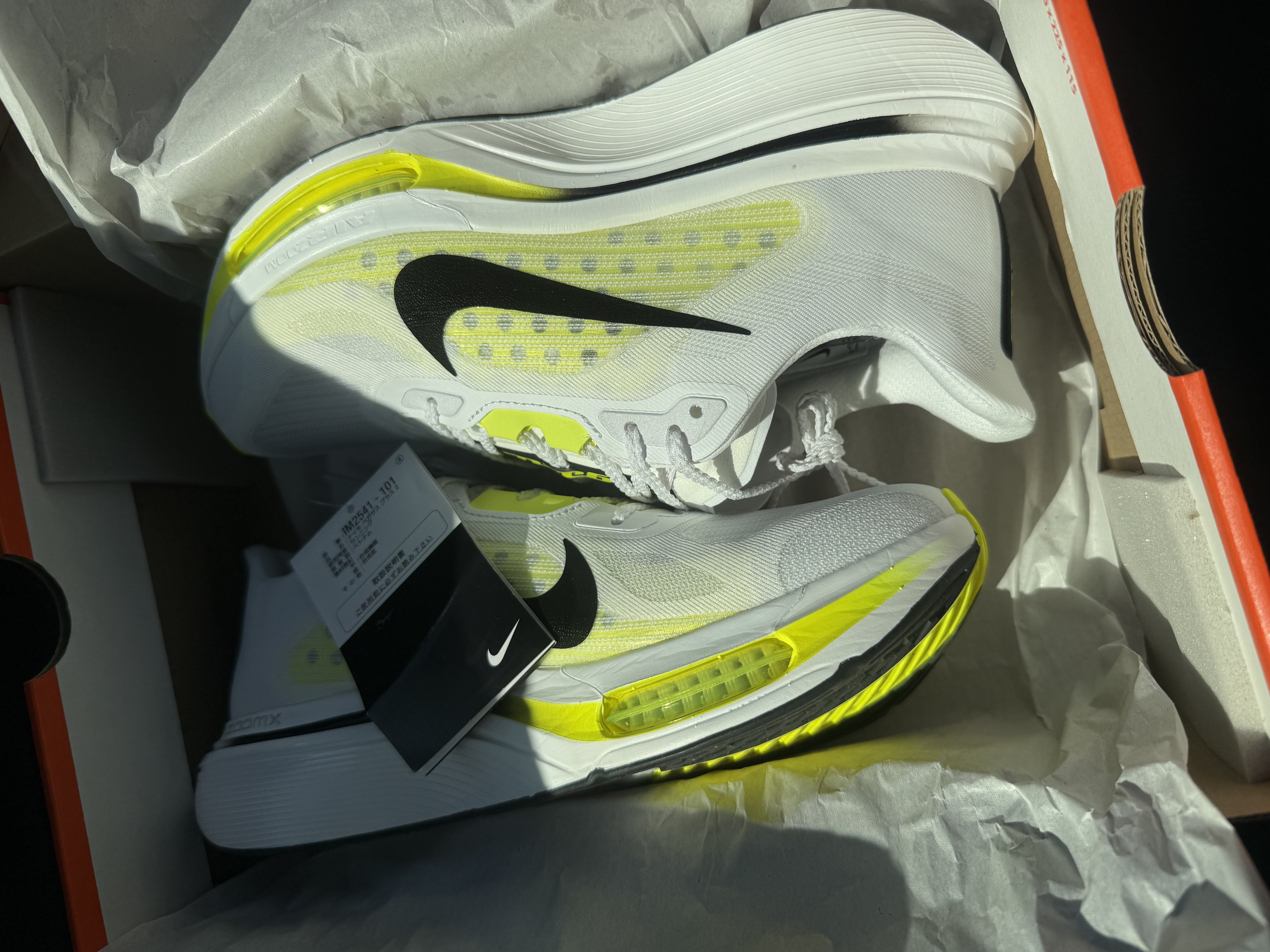
Both shoes use ZoomX foam. I wondered whether the same foam would make them feel similar on a run, but I could not tell just by looking at them. Having worn the Vomero Plus so much, I thought I might notice the difference as soon as I started running. So I went out for an easy run.
A run of about 8 km
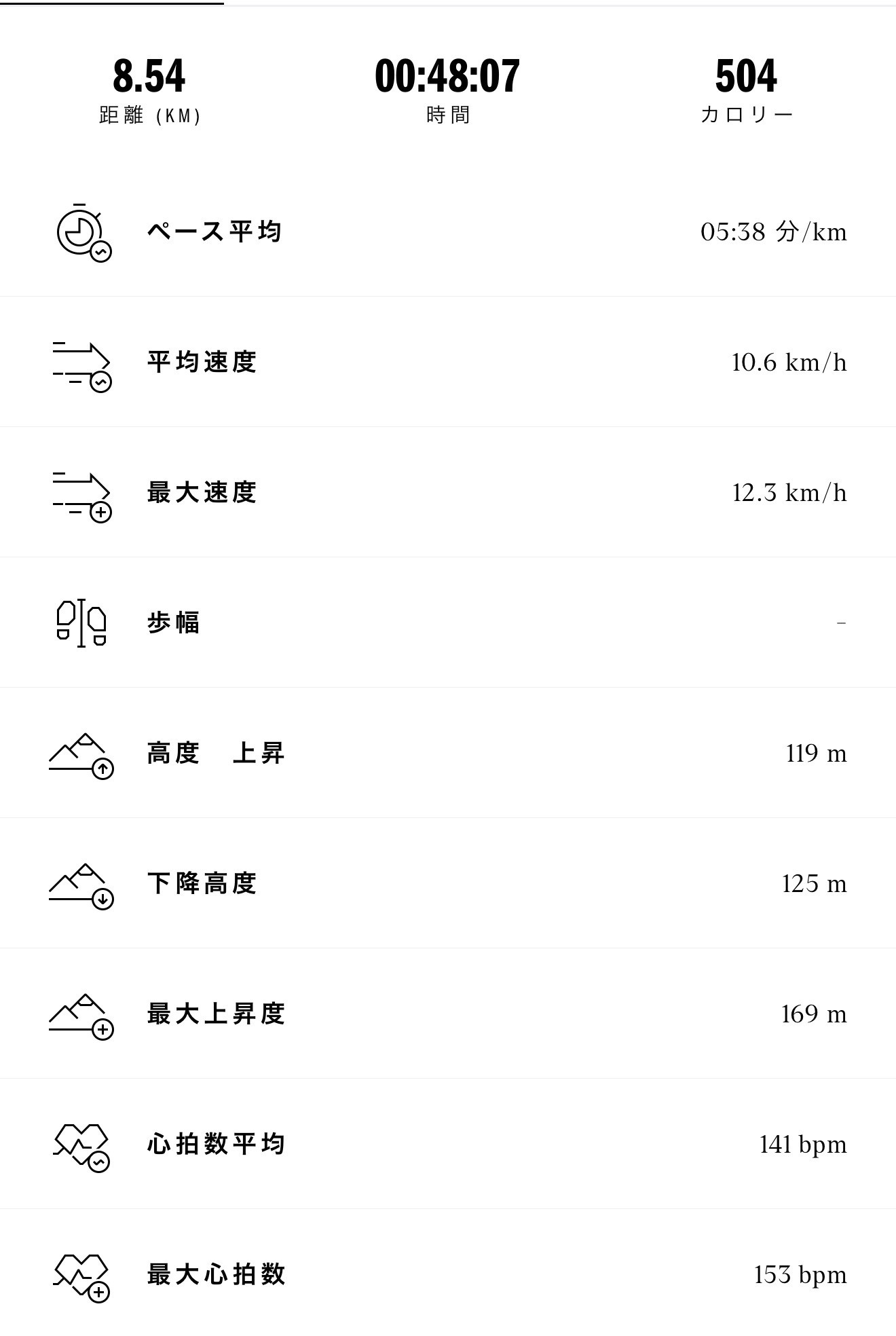
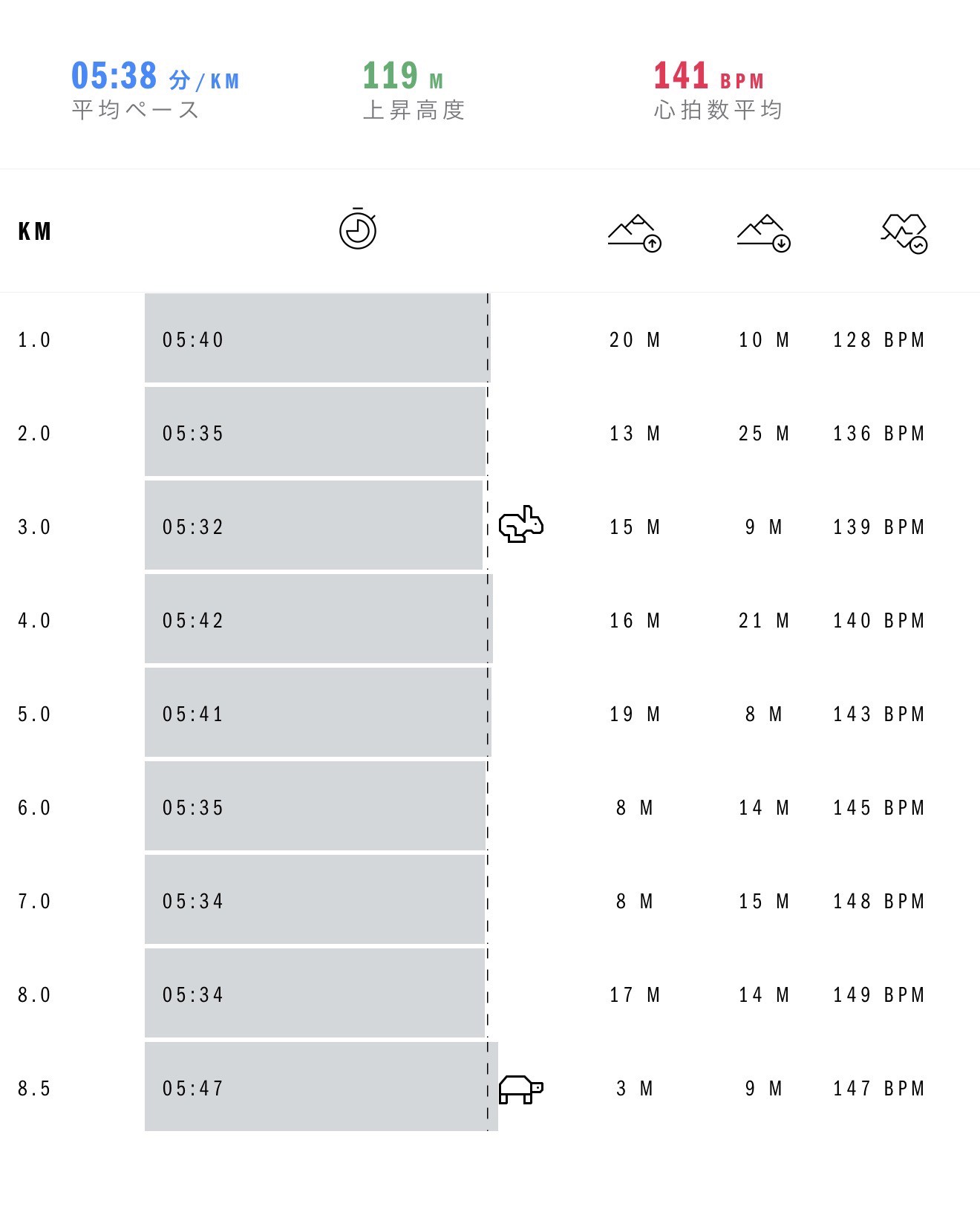
I ran 8.54 km in 48:07. My average pace was 5:38/km, average heart rate was 141 bpm, and total ascent was 119 m. My kilometer splits stayed around 5:32–5:42/km, with the last roughly 0.5 km at 5:47/km. I was not trying to push the pace, and it stayed fairly steady.
In the Vomero Plus, I tend to run at around 5:10/km without thinking about it. I ran in roughly the same area I usually run, but this time the pace was a little slower. I might simply be unused to the Pegasus Plus 2. I cannot put the difference in pace down to the shoes on the basis of this run alone.
A slower pace is not a bad thing, either. As I ran, I started to wonder whether I normally rely on the shoe’s rebound more than I had realized. My kilometer splits were still quite consistent, and I could keep running without forcing the pace. Even if the pace that comes naturally in the Vomero Plus is different, this way of running seems to have its own appeal.
More ground feel than the Vomero Plus
The first thing I noticed was that the Pegasus Plus 2 felt less bouncy. I started out with the feel of the Vomero Plus in mind, so lifting my legs seemed a little heavier at first. There was less of that feeling of the shoe propelling me into the next step.
But as I kept running, I did not feel especially tired. If anything, it felt as though my feet were taking less of a beating. When lifting my legs first felt difficult, I wondered whether it would feel that way throughout the run. After a while, I stopped noticing it so much. It was interesting that my first impression of heaviness did not quite match how I felt by the end of the run.
The Vomero Plus has a stronger sense of rebound pushing me forward. The Pegasus Plus 2 feels more planted, as though I am pressing into the ground myself. Despite their shared ZoomX foam, the sensation when my foot landed was quite different.
The stability felt different, too. If I had to make an analogy, the difference felt a bit like riding on four wheels versus two. With the Pegasus Plus 2, I did not have to think as much about keeping my balance. Each landing felt settled, which made it easier to focus on moving into the next step myself. I do not mean that one is simply better; they ask me to pay attention to different things as I run.
Without as much rebound to rely on, it was easier to feel myself moving my legs with my hip flexors. The parts of my stride that the Vomero Plus helps along were easier to notice as my own movements in this shoe. It might help me correct the habit of relying on rebound to run.
I did not reach my usual pace on this run, but the Pegasus Plus 2 seems promising for long, easy runs. The feeling that my feet took less of a beating would be welcome there, too. Still, this is only my impression after one 8.54 km run. I want to see whether I feel the same way over a longer distance.
I went down half a size
I normally wear a 26 cm Vomero Plus, so I initially considered the same size for the Pegasus Plus 2. But when I tried it on, it felt too big. In the end, I chose 25.5 cm.
The thinner upper might be part of the reason. This reminded me that even with two Nike shoes, the same size on the label does not necessarily feel the same on my feet. Fit also depends on foot shape, so I am glad I could try both sizes in the store.